Today I had my 5 year old son, Jason, help me out with this video! (After promising him a treat).
Jason and I show you how to make sure the car seat is installed correctly in the car, and also how to securely buckle a child into the seat itself.
Did you know all of these details? What have you been missing? Make sure to share with your friends and subscribe to learn more about how to become your own Car Seat Master!
As parents we hope to spend as much time with our kids as
possible and I’m sure we would love to be able to spend every moment with them.
However, life gets in the way and you will have to leave your children in the
hands of a caregiver at some point. This caregiver could be a family member,
friend, babysitter, whoever you trust to watch your children!
I’ve titled this post “Everyone is Responsible” because we
all interact with children, whether you have some of your own or not. It is
important that every adult, especially those watching your children, are
completely aware of the proper use and installation of car seats. Grandparents
take the kids out for a day, friends take them to the movies, and maybe the babysitter
needs to run a few errands. Its okay to let people drive with your children,
but only if they know how to keep them safe!
This is why it is important to teach every person who could
possibly watch your child how to properly use a car seat. It is not enough to
just install the car seat in their car for them. Take the time to explain how
to work the car seat, move the car seat if needed, and how to adjust the child
to stay secure in the car seat. Explain to them why it is important. You never
know what could happen (hence why we use car seats anyway!), and you may not be
around to correct a simple mistake being made with the car seat. It is a good
idea to leave the car seat manual in the car or with the car seat, so anyone
who may have to use it will know exactly what to do. Always make sure to arrive
early to fully explain how to use the car seat and make sure it is installed
correctly in the car.
My whole family knows I am strict with my kids and their car
seats. I have explained at length how they need to be used and don’t let my kids
go with someone who is not willing to take it seriously. I always speak up and
correct a mistake with a car seat. Some people may get offended, but I’d rather
them be temporarily upset at me than have something serious happen because the
car seat was not used correctly.
For those of you without children, some basic knowledge is
needed in case of emergencies. There are 100 different situations that could
occur, but you may be responsible for the safety of a child in the car at some
point.
Many times, the babysitter may never have to travel with
your children and you may not even give them a car seat or booster seat to do
so. If this is the case, you must make it clear to the babysitter that you do
not want them driving with your children in the car without their car seat. As I’ve
mentioned many times, 95% of people use a car seat incorrectly, and you’d be
surprised at how many people don’t use them at all. Make things clear with your
babysitter so you don’t risk them driving with your children without being
properly restrained.
One of the biggest mistakes a parent or caregiver makes when
it comes to car seats is switching a child out of a car seat to a different
kind too early. There are a lot of assumptions when it comes to car seats, especially
about when a certain kind of car seat should be used. Everyone is so anxious to
get their baby turned around and have them facing the same way as everyone else
in the car.
Here are some of the most common things I hear when it comes
to switching to forward facing too early:
“They don’t like not seeing me”
“Their legs are too long”
”They have hit the minimum weight requirement for forward facing”
“They are a year old now”
“I want to see them”
All of these things are false. The child is the safest in the
rear facing position because a rear facing seat spreads the crash force out
more evenly across the back of the car seat and the child’s body. A child’s
body cannot withstand the force of a car crash, and forward facing too early
can cause serious (or fatal) injuries. This is why extended rear facing is so
important.
The American Academy of Pediatrics urges parents to wait
until at least 2 years old to switch a child to forward facing. However, it is
actually best to have a child in a rear facing car seat for as long as
possible, and until they have outgrown the either the height or weight limit on
a rear facing convertible car seat. They should then remain forward facing in a
convertible car seat until at least the age of 5, or if they have outgrown the weight
requirements, before switching to a booster seat.
So, you’re wondering when you should switch your child over
to a forward facing or if they are ready for the next stage of car seats? First,
check the instruction manual for your car seat. Have they met or exceeded the
weight/height requirements for rear facing? If no, then don’t change anything
and check back in a few months (or years). If yes, then it’s time to move up! Switch
the car seat forward facing or switch to the appropriate booster seat for their
weight and height. Never base the car seat you choose off the age of the child.
Every child is different and will advance to the different stages of car seats at
their own time. It is not safe to have a general age standard for when to use a
type of car seat, which is why there are weight and height requirements. Check
out my post about the 4 different stages of car seat safety here.
There is a reason the federal and state government has set rules and requirements for car seat use. It protects our children and saves their lives. Do not take these lightly. For more information about your state’s car seat laws contact your local officials or visit this website.
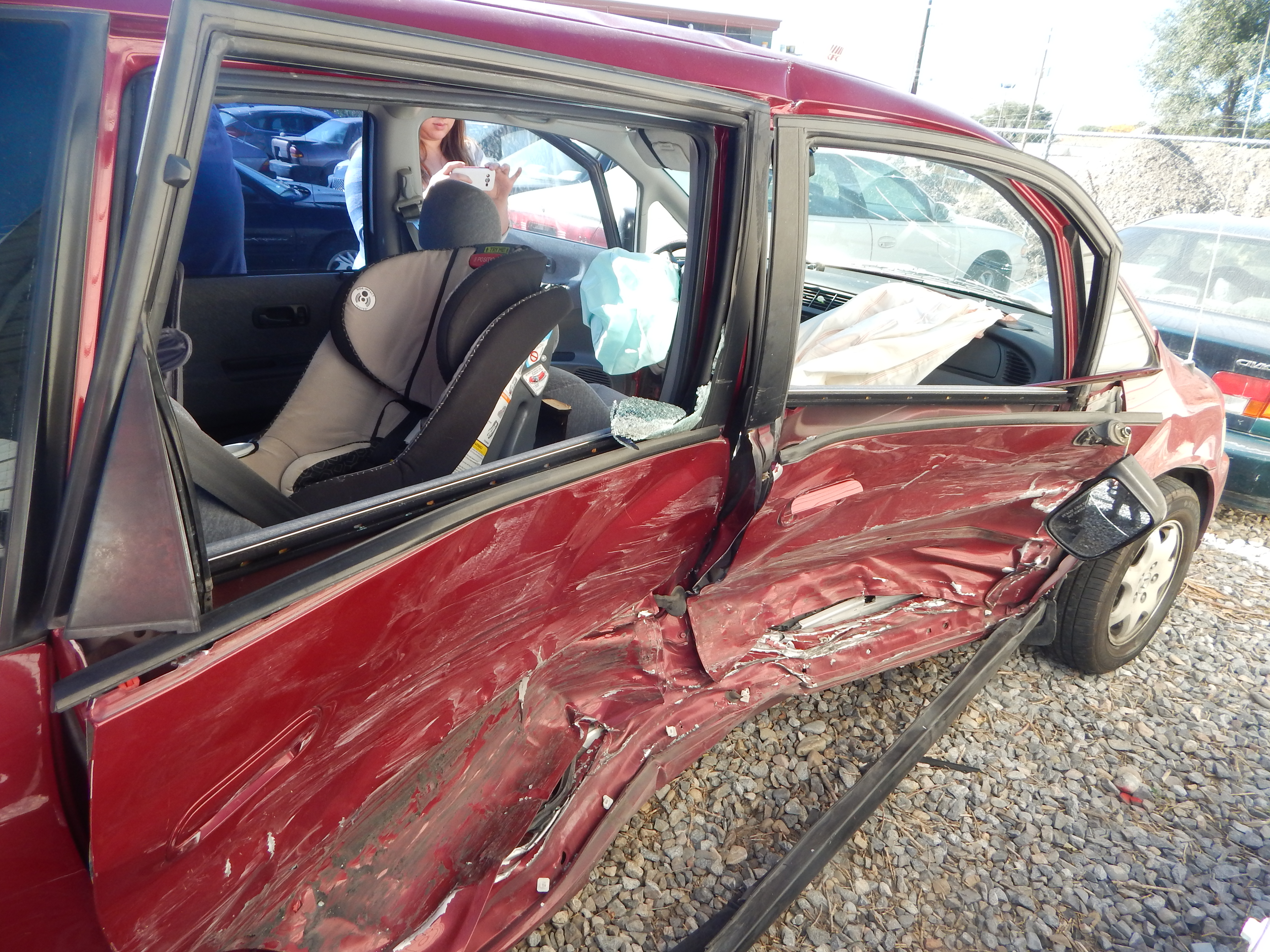
This picture should give you reason enough as to why I care
so much about car seat safety. Obviously, I care about my children and want to
keep them as safe as possible; but the truth is, there is much more to it. Injuries
caused by improper car seat use are 100% preventable, and I aim to get this information
to every parent or child caregiver.
When my oldest, who is now 5, was 1 years old we were involved
in car accident and were t-boned turning left. The car was hit on the side his
car seat was on and was completely totaled. I remember screaming through the
ringing ears and smoke of the airbag and looking back as someone pulled my crying
baby out of the shattered window.
We were the lucky ones. We were part of the 5% of car seat
users who were using the car seat correctly. I do not say this to be prideful,
because at the time I had no idea the impact that improper car seat use could
cause. I simply followed the instructions from the car seat manual and didn’t
think about it again. The police officers who responded to the accident said my
baby probably would not have made it if that car seat was not installed like it
was.
I care so deeply about everyone, and I want every child to
be safe in the car. I see parents who are making simple mistakes and it makes me
so upset! These simple mistakes can cause lasting impacts. Most parents do not
realize the impact of these little things and that their children are not as
safe as they could be while in the car.
Do not think “it won’t happen to me.” It’s not about you as
a driver. It’s the same reason you have car insurance, to protect yourself and
your car. The car seat is meant to protect your child. Please spend the time to
educate yourself about your specific car seat and how to use it correctly in
your car. Be open with your children and those around your family about why it
is important to you. Speak up to friends and family when you notice one of
those simple mistakes. If you say it from a place of love, most people will
understand and be grateful for the information you gave them. It could very
well save their child one day.
The fact is, when used correctly, a car seat will save a child’s
life in the event of a car accident. There is no reason to be lenient on your
car seat use. There is no reason to ever go a day in the car and wonder if the
car seat is installed correctly. There are so many tools out there (like this
blog) to help parents ensure their child is safe in the car. Use these tools,
learn the information, and drive confidently with your kids in the car. Don’t
let yourself be part of the 95% of car seat users who are using them
incorrectly.
Car seats are not complicated pieces of
machinery. As long as you can read and follow instructions, then your child’s
car seat can be installed correctly and safely! In this post we are going to discuss
5 common car seat myths that a lot of people don’t think about or overlook when
using a car seat.
MYTH #1: Using a seat belt to install a car seat isn’t as safe as the LATCH system
Car
seats are designed to be installed with the LATCH system OR a seat belt from
the car. Most cars built these days will have a latch system installed,
however, several older cars don’t have LATCH systems or the seat belt has to be
used for other reasons. As long as the car seat is installed correctly then the
seat belt is just as safe as the LATCH system. Make sure the seat belt is in
the locked position so the car seat does not move, and always follow the car
seat’s manufacturer instructions when installing.
MYTH #2: I can turn my baby forward facing after 1 year
Children
should be placed in the rear facing position in a car seat for as long as
possible. This is usually at least until 2 years old, or until they have reached
the maximum height or weight requirement for a car seat. For more information
please refer to this blog post about the importance of extended rear facing.
MYTH #3: Once installed, car seats don’t need to be adjusted
The car
seat and your child’s straps should be adjusted every single time the car seat
is used. Things can naturally loosen and move around as the car is moving. You should
always make sure the car seat is securely installed and does not move more than
1 inch each direction, or according to the manufacturer’s instructions. The
child’s restraint straps should also be checked each time to ensure they are
snug and in the right position to keep them safe.
MYTH #4: I can keep my child’s coat on while in the car seat
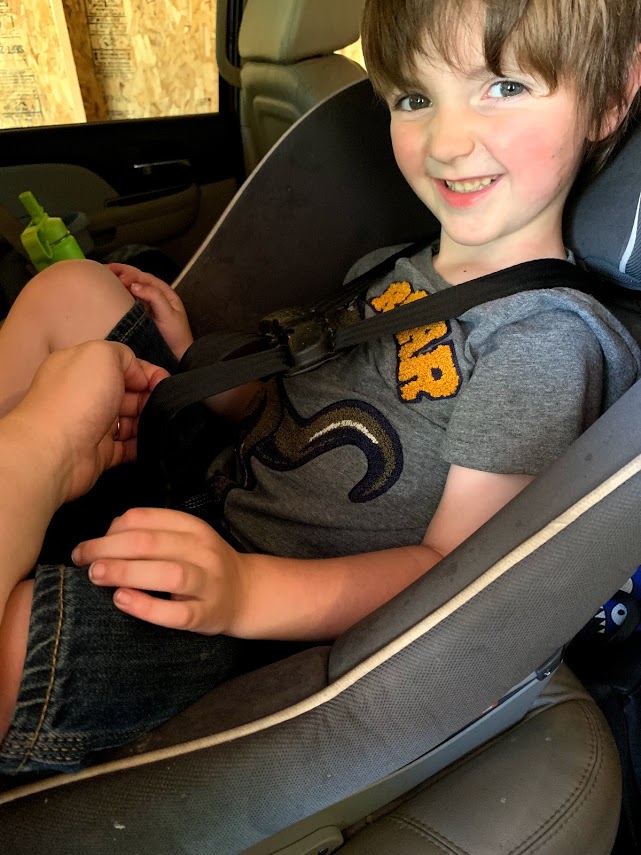
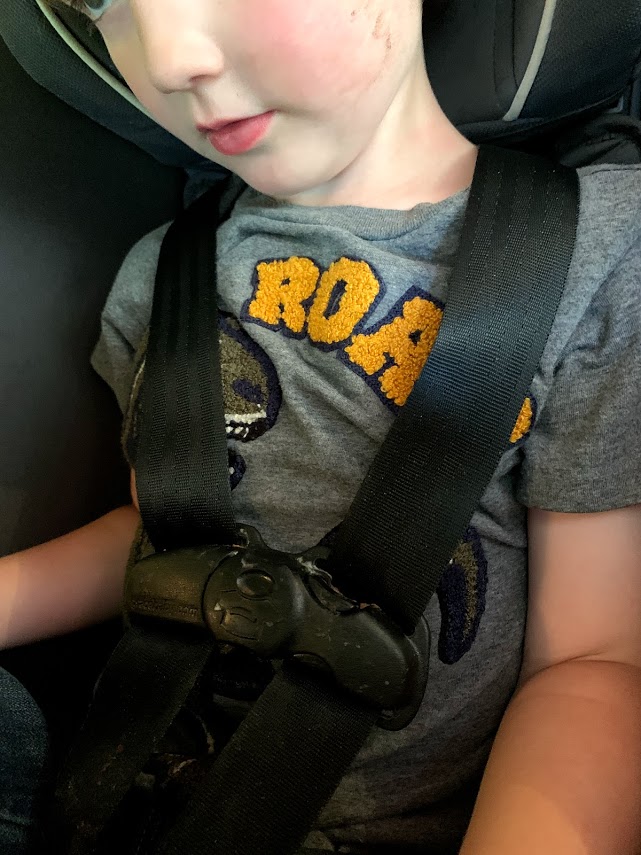
The child restraint straps need to be snug against the body for the child to be safe. If the straps are loose then the child can be ejected from the car with the force of an accident, or even slip out of the seat if the car rolls over. They should not be wearing any sort of winter coat or thick jacket while in their car seat. 1) it isn’t comfortable. Do you like being stuck in the car in a big marshmallow coat? 2) Wearing the jacket prevents the straps from being snug. While they may seem tight at the time, that coat is likely filled with feathers. During an accident the force will press down and compress the jacket leaving empty space between the child and the straps and making them more vulnerable to injuries or falling out. If needed, bring along a light jacket to wear in the car and save the big puffy coats for before and after being in the car seat. Being cold for a few minutes is better than falling out of the car seat!
Here is a before an after with my 5 year old son Jason. These pictures show just how much room there is when you have a winter coat on.
MYTH #5: Used car seats are just as good as new
All car
seats have an expiration date that is generally between 5 – 10 years. Car seats
are made out of materials that can break down and degrade over time. You also
never know the history of the car seat and if it has been in any sort of accident.
Any type of accident that has enough force to crack a window or deploy an airbag,
has enough force to damage the inside of a car seat. It is always to be safe from
the beginning, rather than be sorry later when the car seat did not protect
your child. This is why it is also important to replace a car seat after an accident,
even if the child was not in the seat at the time.
Take a moment and search on Amazon or Google for “car seat” and see what results pull up. You’ll see car seats and booster seats starting at $45 and some going upwards of over $200. Luxury car seats can even go for over $500. So, what’s the difference between all these options with such a huge price range? Are the more expensive ones better? Are they safer? Do they last longer? While there are some differences with long term durability, the high-priced car seats are purely for the brand name, convenience, and all those bells and whistles.
The fact is, all car seats within
the United States are tested by and have to pass the same federal safety standards.
That’s right – the $45 car seat is just as safe as the $500 one! The National
Highway Traffic Safety Administration (NHTSA) has set the Federal Motor Vehicle
Safety Standard. This provides child car seat performance stands for children
up to 80 pounds. Both vehicle and car seat manufactures are required to ensure
their products are meeting these standards. It is important to note that these
are performance standards only, and not for the design of the car seat or
booster seat. The performance standards regulate how cars and child restraint
seats should perform in the event of crash. It is up to the manufactures to
determine design.
Picking The Right Car Seat
I hope that the process of picking a
car seat will be easier now that you know that you don’t need the most expensive
one! There are many factors to choosing the perfect car seat for your family. Some
things to consider when picking a car seat include ease of use, how the car
seat fits the child, if the car seat fits in your vehicle, and of course your
budget.
Ease of use is very important to ensure
the car seat is being used correctly each and every time. You may want to consider
a smaller and easy to install car seat if there is an older grandparent watching
the child regularly. Do you have to move the car seat from car to car? Then you
may want to look at one that is easily adjustable and weighs less to make the
move easier. This is something I did not think about when I recently purchased
two new car seats for my 2-year-old and 5-year-old sons. We only ever drive my
car because their car seats are so huge and a pain to move around!
You must also think about the stage you child is currently in and if you are looking for a car seat that will last through only this stage, or multiple stages. (Check out this post about the 4 different stages of car seat safety here). Convertible car seats can usually last the child through all stages, but their price tags also tend to run a little higher. Make sure you also double check your car’s manufacturer guide to see if it is car seat compatible. It is rare, but some older cars are not equipped to properly install a car seat and keep a child safe.
Ultimately, the most important
thing to consider when purchasing a car seat is if it will fit in your budget.
There is no need to pinch pennies or go into debt for that name brand fancy car
seat. Is it nice? For sure, but it is not needed. They will all keep your kids safe
as long as they are properly installed and used!
Did you know only 5% of car seats are being using correctly?
This includes the way the car seat is installed into the car and the way the
child is restrained into the car seat or booster seat itself.
Here is a video demonstrating what happens to the car seat and to the child
when the car seat is not used properly.
In this video there were the following errors:
1.Loose safety belt
2.Loose and incorrectly routed harness straps
3.Low harness clip
Let’s go into more depth on each one of these.
Loose Safety Belt
The safety belt is the part of the car seat that attaches to the car. This could be done with the actual seat belt or with something called the LATCH system. According to the car seat manufacturer Britax:
“LATCH stands for Lower Anchors and Tethers for Children. LATCH is required on car seats and in most vehicles manufactured on or after Sept. 1, 2002, to make car seat installations easier. However, even in vehicles equipped with LATCH, parents can still secure the child seat using the vehicle seat belt and tether.”
As you can see in the video above, a loose safety belt does not keep the car seat secure enough in the event of an accident. The car seat can go flying out of place and in some cases even be ejected from the car. When the car seat is properly installed with the safety belt or LATCH system it also protects the child from some of the force by securing the car seat to the seat of the car.
Loose and incorrectly routed harness straps
The harness straps are what keep the child restrained within the car seat. The video shows how the child moves forward due to the loose straps. This could result in severe spinal and neck injuries, especially in younger children. The harness straps must be taught and snug against the child and they should not be able to wiggle out of them. Even if the car seat is installed correctly in the car, having loose straps could mean the child slips out of the car seat all together. This could mean being ejected from the car or falling out completely if the car happens to roll over.
Low harness clip
All infant carriers, convertible car seats, and some booster seats in the United States are made with a 5 points harness. The harness clip is the piece that should clip over the child’s chest. This is so vitally important. Improper clip placement could mean damage to internal organs, broken ribs, or the child slipping out of the car seat. The chest clip should be snug and level with the child’s armpits. This prevents the child from being able to slip out and also has the impact around the strongest part of the child’s torso, rather than down below above their organs.
This chest clip is way to low and would crush the internal organs. The straps are also too loose and the child could easily fall out of be ejected from the car seat.
As you can tell all these elements are equally important for the proper use of car seats. Make sure to check out this video HERE where we will go over how to check your car seat for proper installation and use.
It is important to note that you must always follow the manufacturer’s instructions on proper installation and use for your specific car seat.
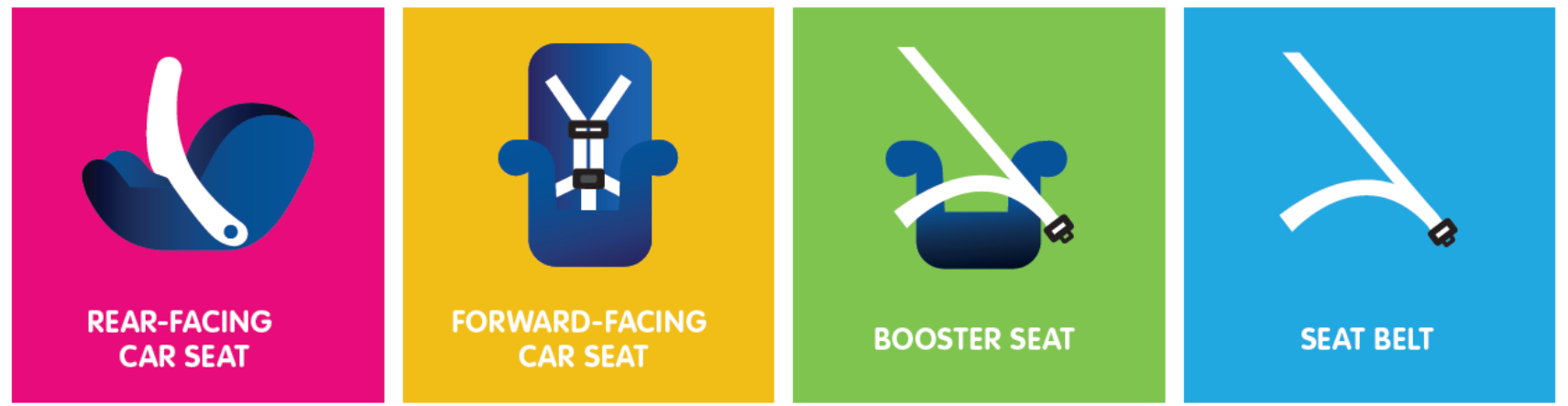
Hello and welcome to the first step in becoming your own Car Seat Master! Today we are going to discuss the 4 different stages to car seat safety. Each one has its own purpose and are all equally important for the safety of your child in the car.
1. Rear Facing
The first stage of car seat safety is a rear facing car seat. There are two types of rear facing car seats; infant carriers and convertible car seats. Rear facing car seats are vitally important in the first 2 years of a child’s life. The American Academy of Pediatrics recommends a child should be rear facing as long as possible. In fact, some states have passed laws requiring children to be properly restrained in a rear facing car seat until at least 2 years old.
Most families with new babies will have an
infant carrier. An infant carrier is an easy and convenient way to move a younger
baby in and out of the car. Most infant carriers will have a weight limit of 20
pounds, at which point the child should be transferred to a rear facing
convertible car seat. Convertible car seats have a much higher rear facing
weight limit, which is usually around 40 lbs.
Why is rear facing so important? The
American Academy of Pediatrics says –
“When a child rides rear-facing, the head,
neck, and spine are all supported by the hard shell of the car safety seat,
allowing the car seat to absorb most of the crash forces, and protecting the
most vulnerable parts of the body. When children ride forward-facing, their
bodies are restrained by the harness straps, but their heads – which for
toddlers are disproportionately large and heavy – are thrown forward, possibly
resulting in spine and head injuries.”
2. Forward Facing
Rear facing protects your child from serious head, neck, and spinal injuries (such as whiplash, broken vertebrae, and internal decapitation). In another post we will go more in depth about the importance of rear facing car seats and debunk the most common car seats myths.
The second stage in car seat safety is forward facing. Most forward facing car seats will be a convertible car seat, which can also be used as forward facing and sometimes as a booster seat. It is best to wait to switch a child into a forward facing car seat until they are at least 2 years old, but not recommended until have reached the maximum weight or height requirements for the rear facing position. This could sometimes be 4 years old or later depending on size of the child. Always follow the manufacturer’s instructions and weight/height limits for each specific car seat.
It is very common to place a child in the forward facing position too early. This puts the child at risk for serious injuries or death. Follow along and we will discuss later why waiting to forward face is so important.
3. Booster Seat
The booster seat is an important step and
is often skipped all together. It is the last step before a child can use a seatbelt
only. Booster seats are a seat cushion used to elevate the child in the car and
uses the regular seat belt across their body. Booster seats start with a back
attached and then move onto a backless booster seat.
A child should be in some type of car seat or booster until they are at least 4’9” tall and 8 – 12 years old. Aside from the size and height of the child, they must also be mature enough to handle sitting in a booster properly and be able to understand seat belt safety.
4. Seat Belt
We made it! The seat belt is the last stage of car seat safety. There is no need to rush to this stage. The height and weight requirements for car seat safety are designed to protect your child. The smaller a child is the more protection they need. Only when they are old enough, mature enough, and big enough will they be safe in the car with the seat belt only.
Make A Difference With Me
Motor vehicle crashes were the #1 cause of death among children and adolescents in 2016 and only 5% of car seats are being installed and used correctly. Help me change this by following this blog, sharing it with your friends, and becoming your own Car Seat Master! And then ask yourself – Is your child in the right seat?



 Car Seat Master
See what others are saying: